Marlinspike Seamanship
By Ted Walsh
Knife lanyards
As with the subject of knives, the use of and type of knife lanyard that any given sailor prefers will be a reflection of
that individual’s experience. Someone who has never dropped a knife might not feel that there is any need for a lanyard.
However, anyone who has narrowly been missed by a knife falling from aloft (imagine the sound the blade makes as it
thwacks into the deck near your foot) can quickly see that there is a time and place to put your knife, or any other hand-
tool on a lanyard.Likewise, anyone who has heard that distinctive plop as a tool drops overboard gets the point.
Having pointed out the need, it should also be said that a lanyard that hangs out of a pocket or sheath will catch on
everything.
I am reminded of the writer M. R. James who wrote so eloquently about the malevolence of the inanimate.
So what is the answer?
The best answer I can give you is that just as you might have a more than one knife or tool aboard, you should have
more than one type of lanyard.
So here are some options:
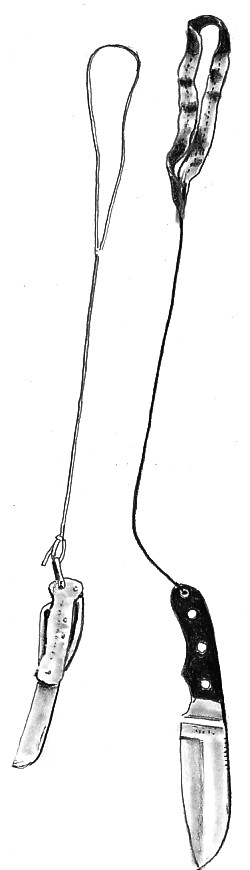
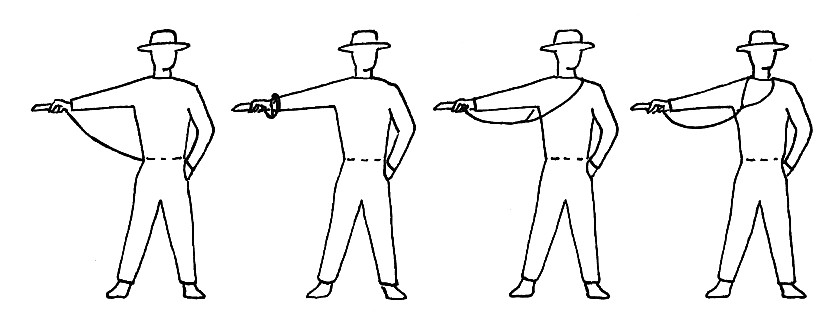
Knife lanyards come in four basic types: Lanyards that attach to a belt or belt-loop, lanyards that cinch over the wrist,
shoulder lanyards, and lanyards that loop around the neck.
There are advantages and disadvantages to each type.
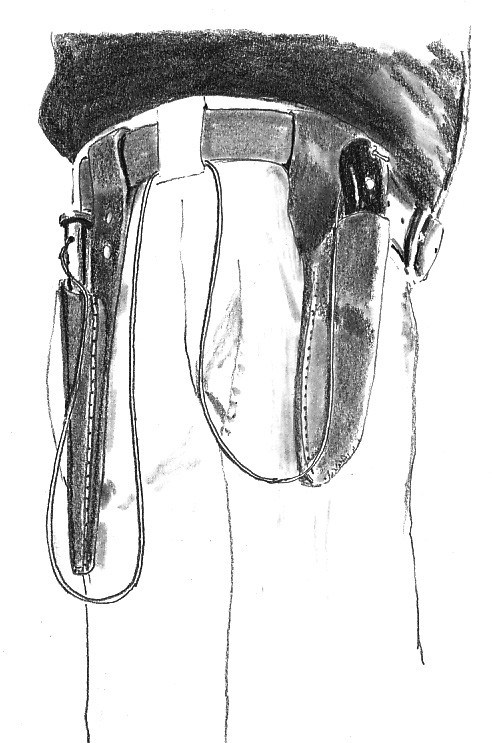
The belt or belt loop version is particularly good if you
know you will be using the tool in question in only one hand.
The lanyard can simply be tied off to a belt loop on the same
side of your body as the hand you will be using. Another ver
sion of this set up is particularly good if you are going to need
to alternate between two tools, say a knife and a marlinespike.
Tie one end of the lanyard to one tool, pass the lanyard through
a belt loop and tie it to the other tool.
The drawback to this lanyard is that if you have set everything
up to use the tool or tools with say your right hand and then you
discover that some part of the job is easier to do with your left.
The cross over of the lanyard is both awkward and you may find
the lanyard won’t reach. The other problem with this type is that
you will have a loop of lanyard hanging down from your belt,
which tends to catch on everything.
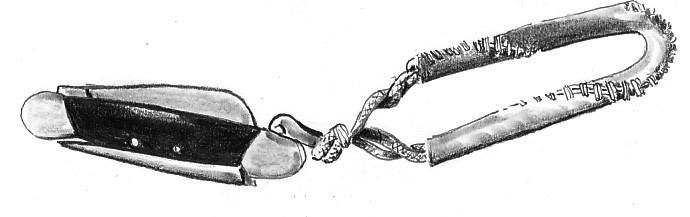
The wrist lanyard is perhaps the simplest form, especially if it
can be disconnected from your knife quickly. The shortcoming of
this particular setup is that once on your wrist, it may be dangling
in the way when you are not actually using your knife.
A lanyard that loops over a shoulder or neck is another simple
arrangement. It allows you to use either hand and is a little less
likely to snag on parts of the rigging. The drawback to this type is
when going aloft, a safety harness or bosun’s chair can limit how
much you can rotate the lanyard around neck or shoulder.