Marlinespike Seamanship
By Ted Walsh
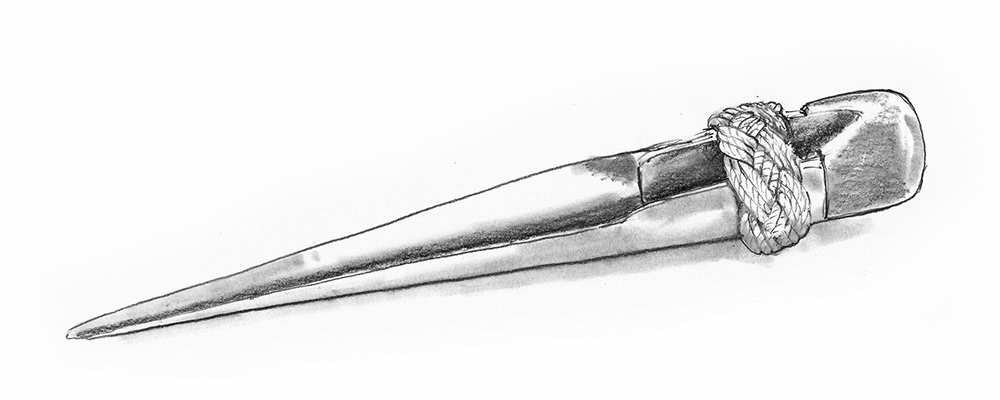
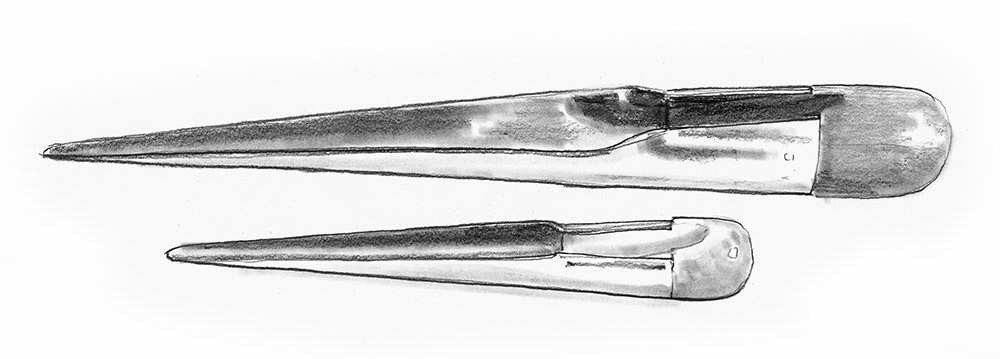
Hollow fids
Splicing is one skill that goes along with the routine
maintenance of a traditional sailing vessel. This is not a
hugely difficult skill to learn and there are literally dozens
of videos on the internet that demonstrate different splices
(some videos are better than others).
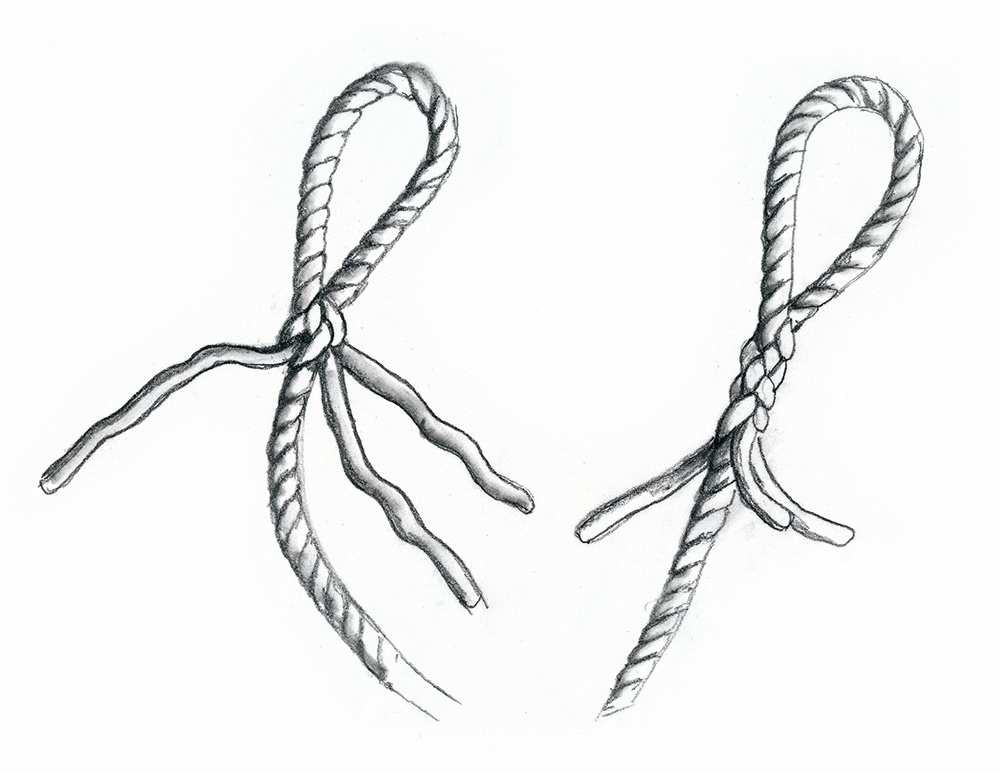
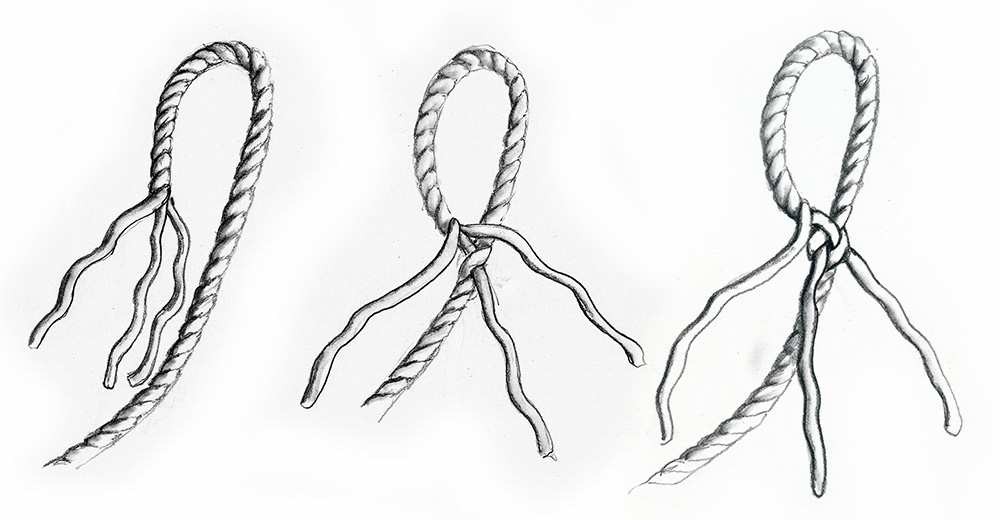
Most of you reading this are familiar with splicing, and some of you are masters of the art. A diagram of a simple eye splice illustrates
the basic principles of splicing, but neither it, nor those videos mentioned, deal with the most difficult aspect of splicing three strand
rope, which is that it really is almost a three-handed operation.
Untwisting the strands of the standing part of the
line, holding the strands open, and pulling through
a strand to form each step of a splice, while
keeping the yarns of the strands from catching on
each other, are operations that all need to happen
at almost the same time.
A hollow fid can make this job considerably
easier. In essence, this tool becomes the third hand
you need to make the process of threading the
strands easy.
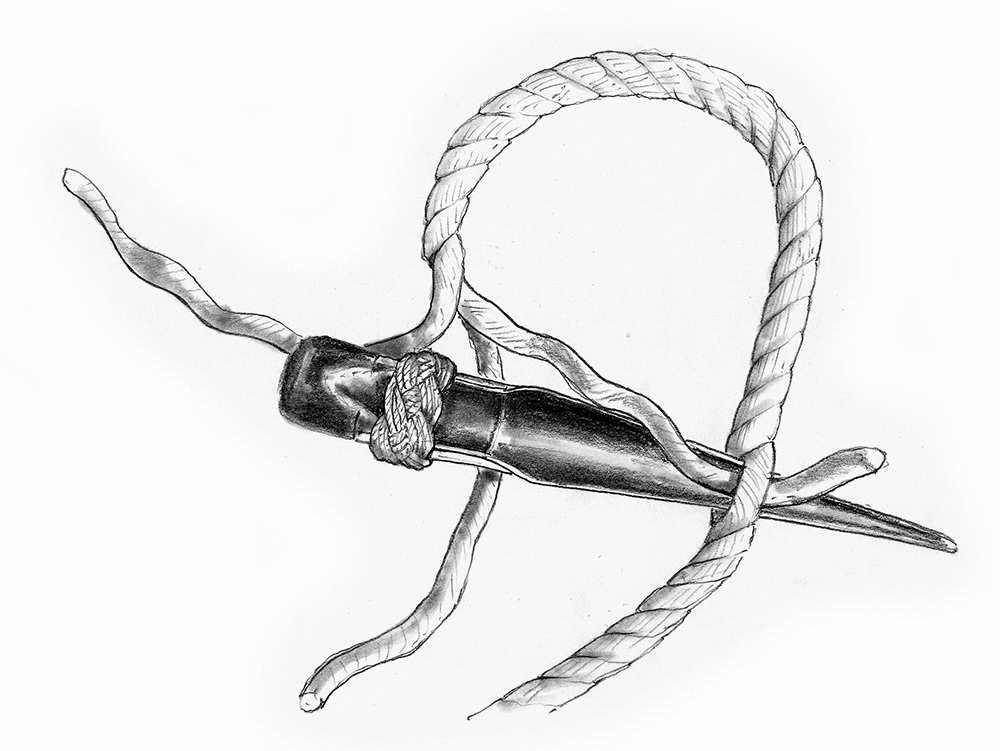
Inserting the fid between the strands to be
separated spreads the strands, holds them apart,
and provides a smooth, hollow surface through
which to pass the strand you are working with. It
also leaves both hands free to work the strand that
is being spliced into correct position, and the
smooth metal surface of the fid keeps the yarns of
the different strands from catching one another
and making a mess of your splice.
While simple and inexpensive, those of you famil-
iar with this tool already know how valuable it is.
The two most common sizes are 7” and 11”, and
of the two, the 7” is the most useful size. You can
expect to pay between $10 and $20 for a 7” fid
and it’s well worth the price. In some instances the
wooden handle is only attached with one rivet; a
Turk’s head knot will give you a more secure
handle.
– 3 –