Marlinspike Seamanship
By Ted Walsh
Coachwhipping
Let’s say that you want to cover a hand
rail, stanchion, or handle with a surface
that is both decorative and easier to grip
than a smooth surface. The choice for a
long section of covering would be coach
whipping.
While technically the knot is a form of
square sennit, when you coachwhip some
thing you are essentially creating a long
extended Turk’s head over a long round
object. This kind of knotted covering was
once used extensively to cover rope, or
leather handles to add stiffness and a better
grip and was a common form of handle for
actual coachwhips, from which this kind of
sennit takes it’s name.
Unlike a typical Turk’s head it is tied
using multiple strands, but like a regular
Turk’s head it can be a two, three, or even
four strand knot depending on the diameter
of what you are going to cover.
Before you commit to this project, here
are a couple of tips:
-Use either quality marlin, twisted cot
ton, or hemp. Nylon tends to slip too much
and if you intend to paint the coachwhip
ping, nylon will not hold the paint.
-Before you start, wrap the object that
you are going to coachwhip with double-
sided cloth friction tape; this will help hold
the bundles of strands where you place
them.
To get started, figure out the diameter of the object to
be covered and the diameter of the line to be used to tie the
coachwhipping. Now figure out how many sets of lines it
will take to surround the object to be coachwhipped. (You
need to have an even number of sets).
To figure out how long your pieces of line should be,
take the length of the object to be covered and double it.
This should give you some leftover, but that will make ty
ing the end easier.
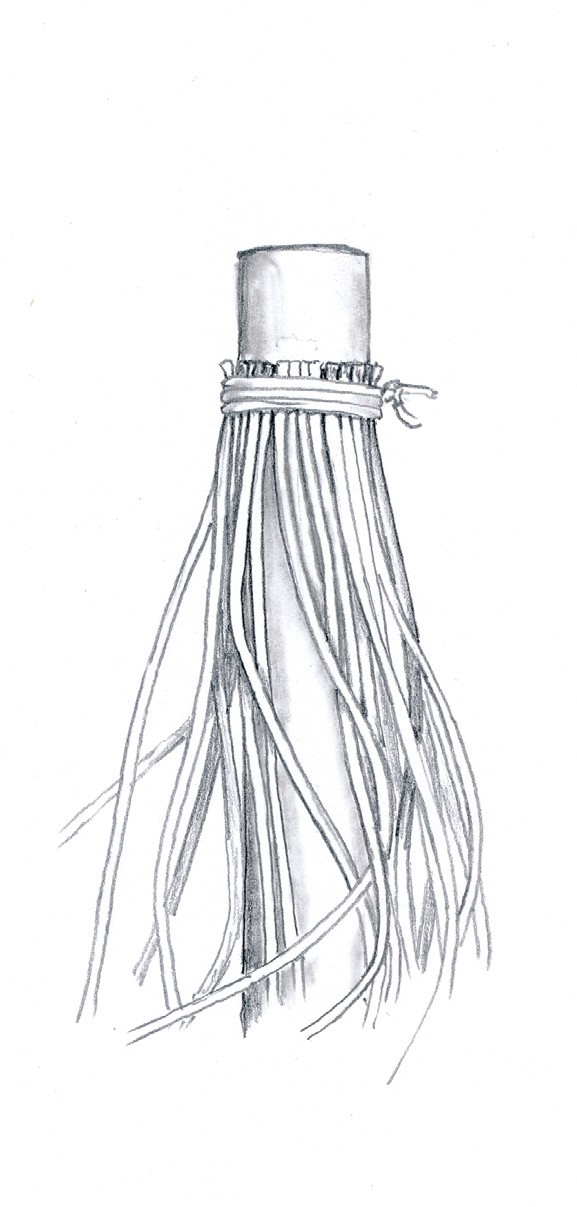
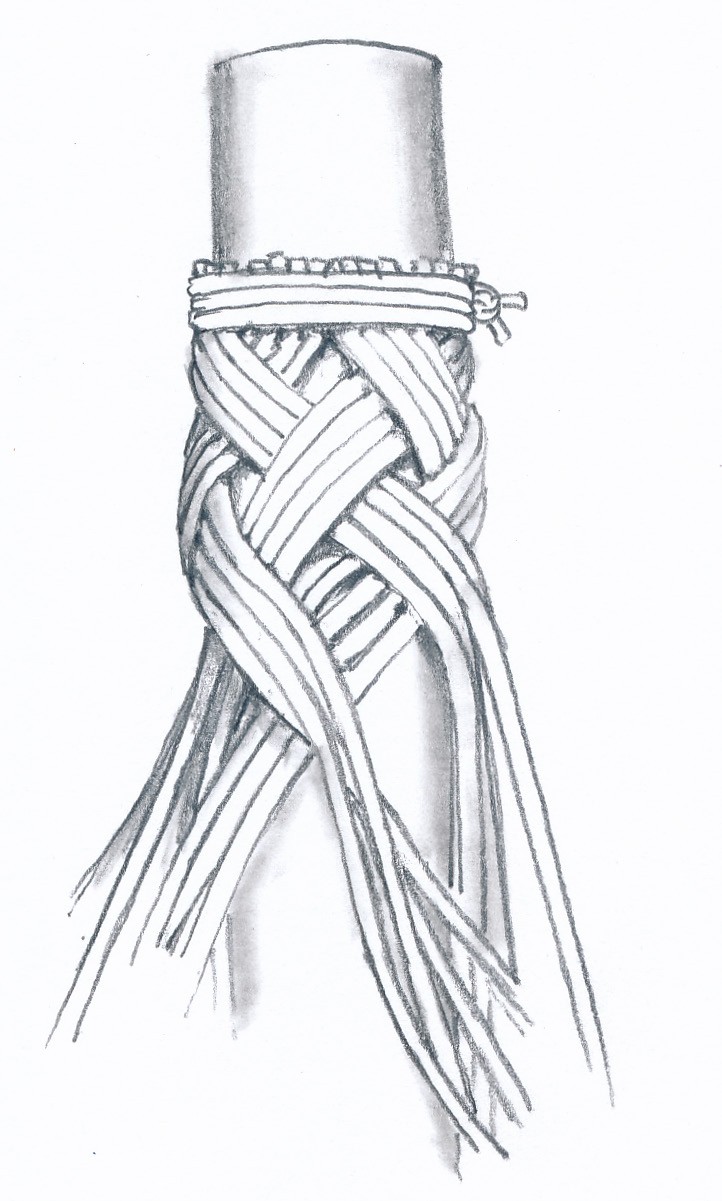
This illustration is for eight bundles of four strands each.
Seize or tape the groups of lines at the starting point of
the coachwhipping:
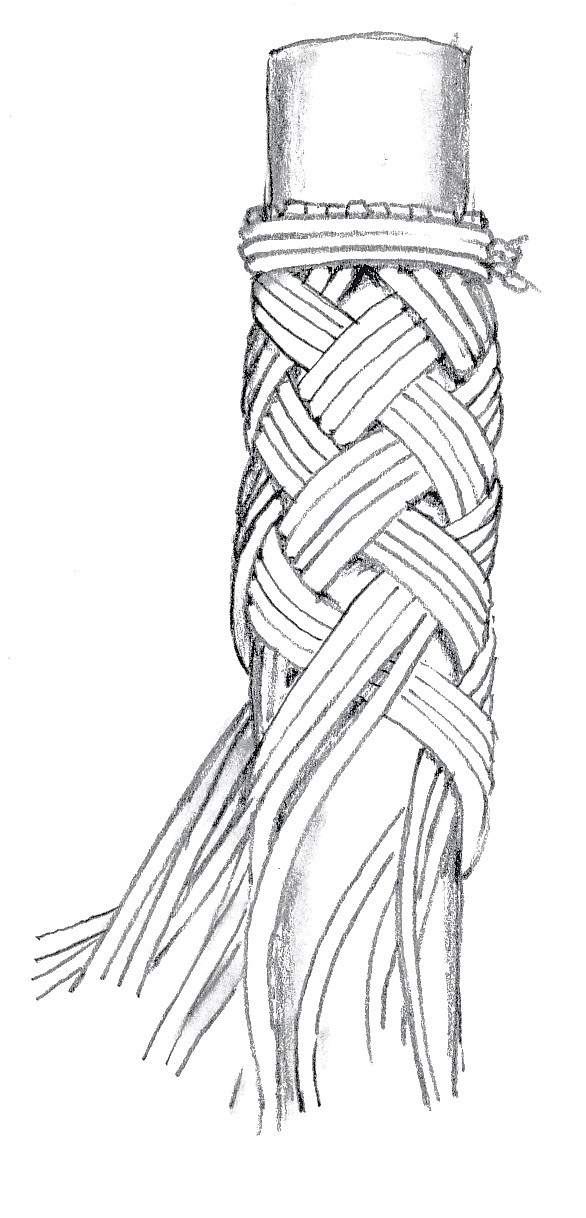
The tying pattern is shown here:
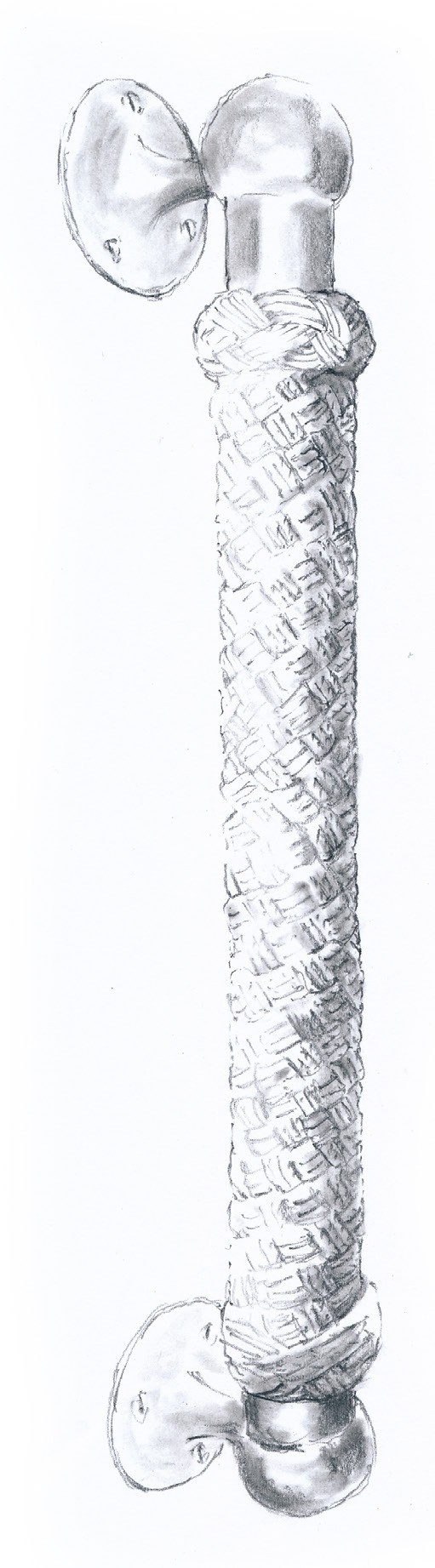
When you have finished the coach
whipping, seize the ends just as you
did when you started. Now cover the
ends with either French spiral hitch
ing, or as shown in the handgrip, a
Turk’s head at both ends.