Marlinspike Seamanship
By Ted Walsh
Color Coding Three-strand line
We often have guests aboard who would
like to help sail the boat, but they don’t
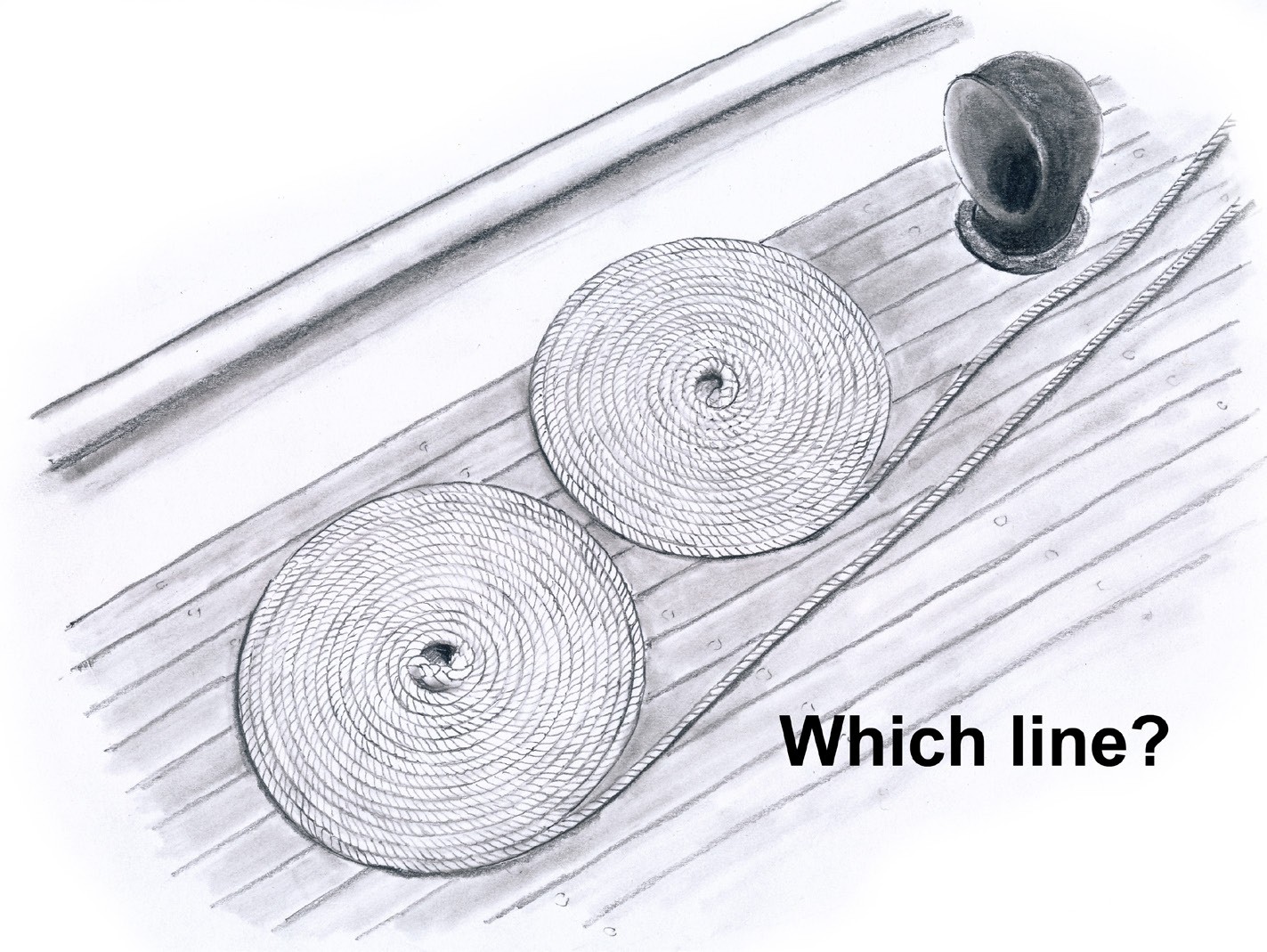
know the lines. It can be difficult to describe
which line to haul on, cast off, or belay.
More modern rigs use color-coded braided
line to make this easier.
However, if you have tradition three-
strand line, and many of us do, there are not
really color options. Additionally there will
be many purists that don’t like the look of
colored braided lines on a traditional rig.
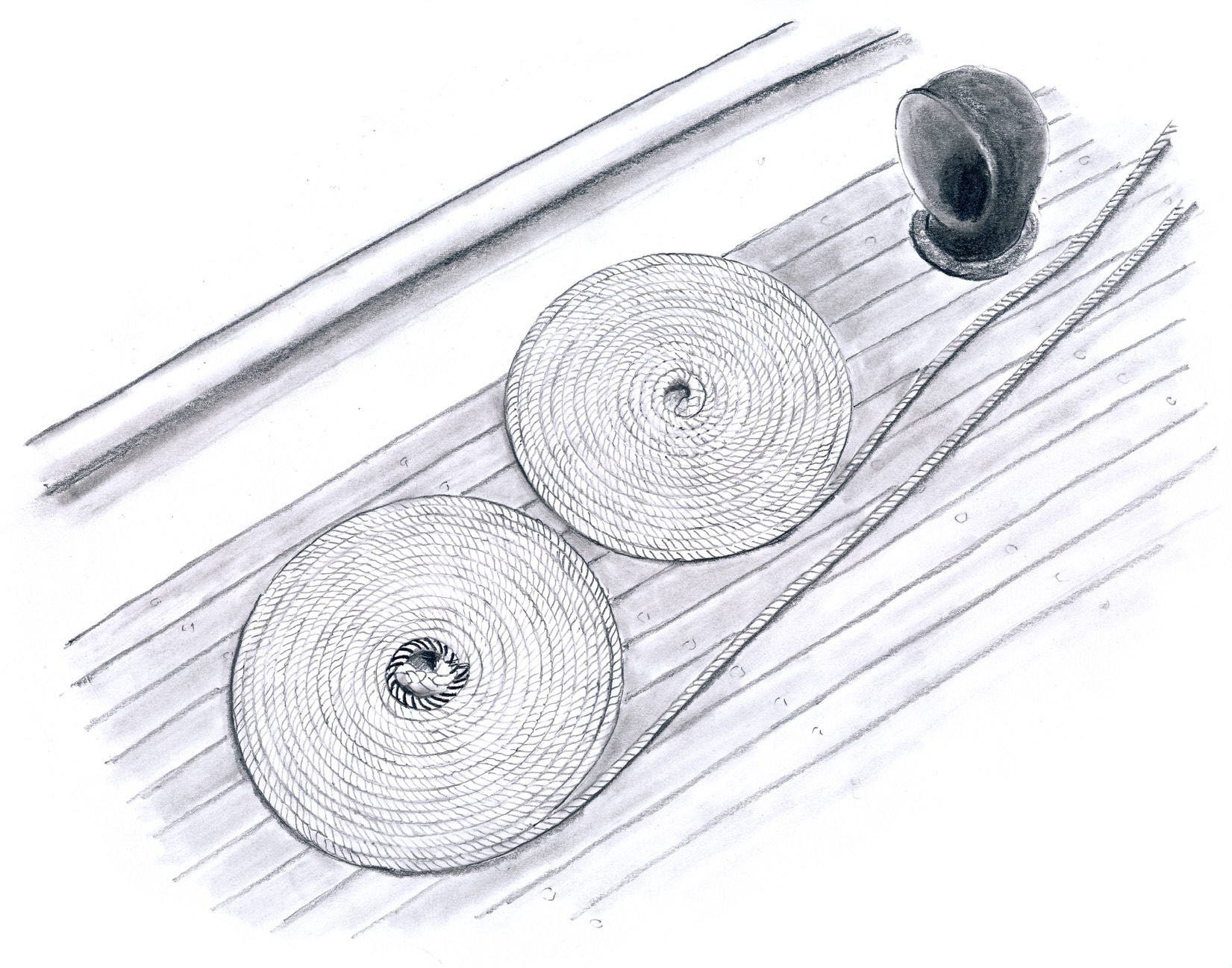
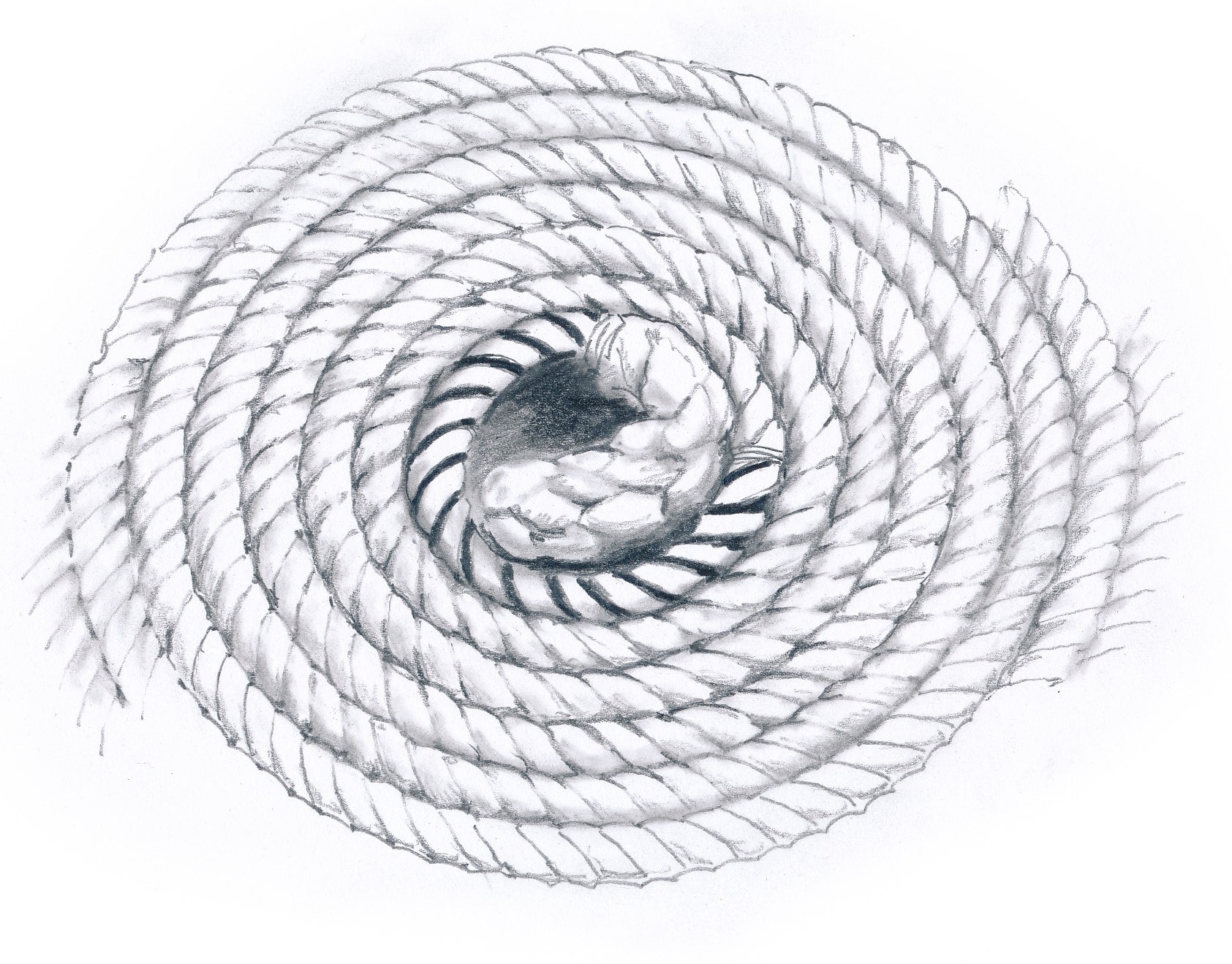
One solution is to color strand the end of
your three-strand line.
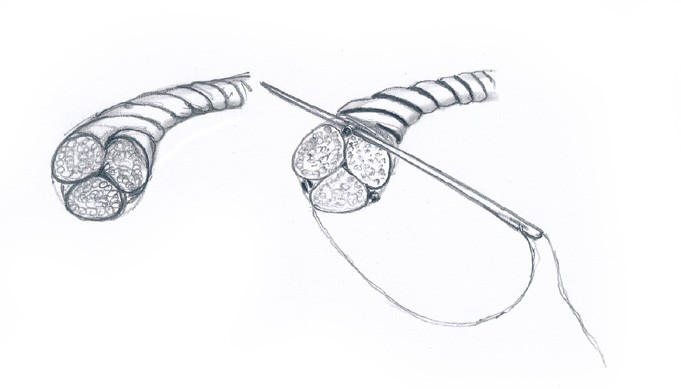
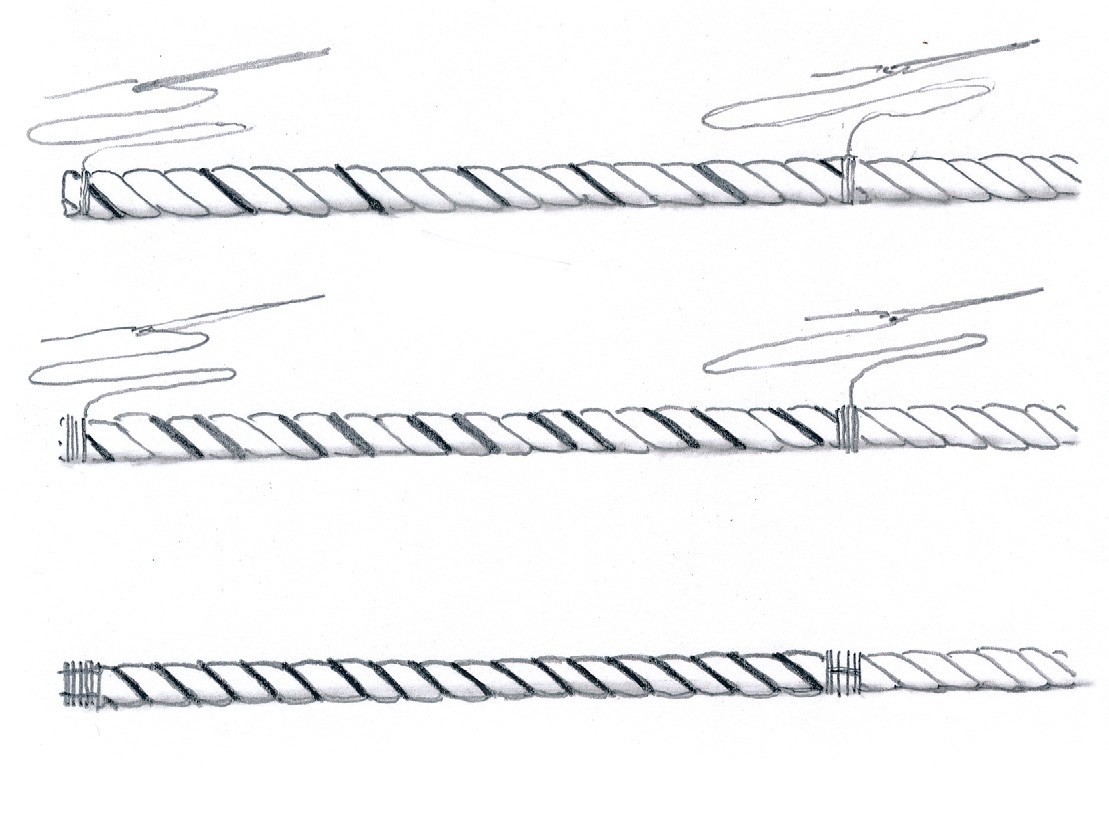
What you are technically doing is “worming” the last foot or ten inches of the bitter end of a halyard, sheet, or down
haul, with colored braided line that has a small diameter. This is easy to do; aesthetically it fits in with a traditional rig, and
can make it much easier to identify a specific line.
The result will be more subtle than
a modern brightly colored line, but it
is distinctive enough to let a novice
identify the correct line.
You will need:
– Small dimension colored braided
line
(I use either 275 lb or 95 lb utility
cord, or micro-cord, depending on
the size line that I am color-coding.
These come in different colors and are
inexpensive.)
-A marlinespike or hollow fid
-sailmakers needle or roping nee
dle, anything between #10-#15 in size
-Some sailmakers waxed twine
Choose a color-braided cord that is small enough to lie
between the three strands of line that you are marking.
The key to getting this to work right is to make the
braided cord lie snuggly between the three strands of the
line without increasing the diameter of the line, or having
the colored cord come loose from the line.
So, to keep the ends of the braided cord in place and un
der consistent tension, you need to stitch or whip the cord
in place at either end of the wormed section. This will keep
a uniform tension on the cord and line.
Where the line has been wormed, it will be stiffer than
the rest of the line (filling the void between the strands
takes some of the flex out of the line) so you will likely not
want to have the section that is wormed be more than ten or
twelve inches.